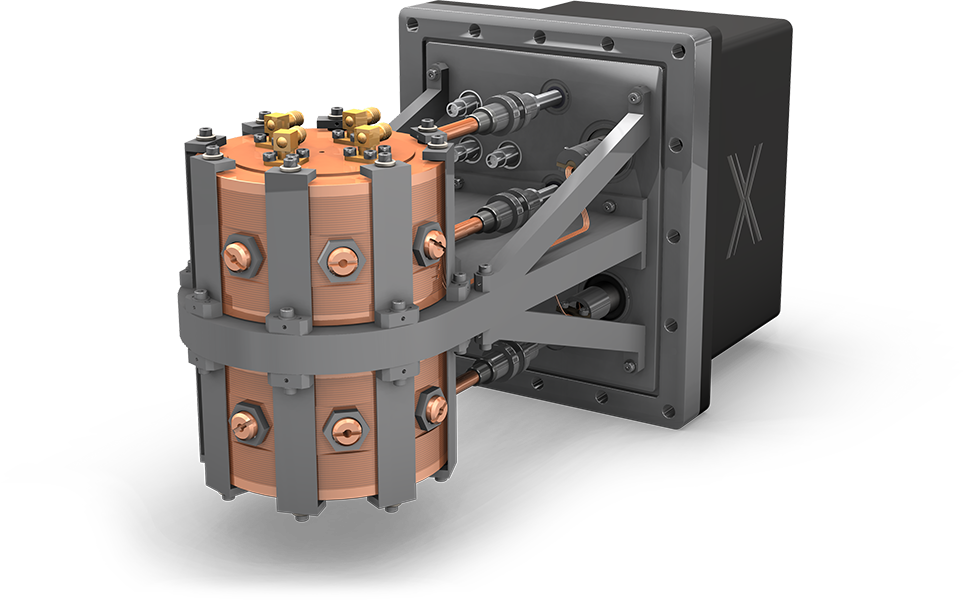

Clocx Module
Ultrafast electron techniques for microscopy
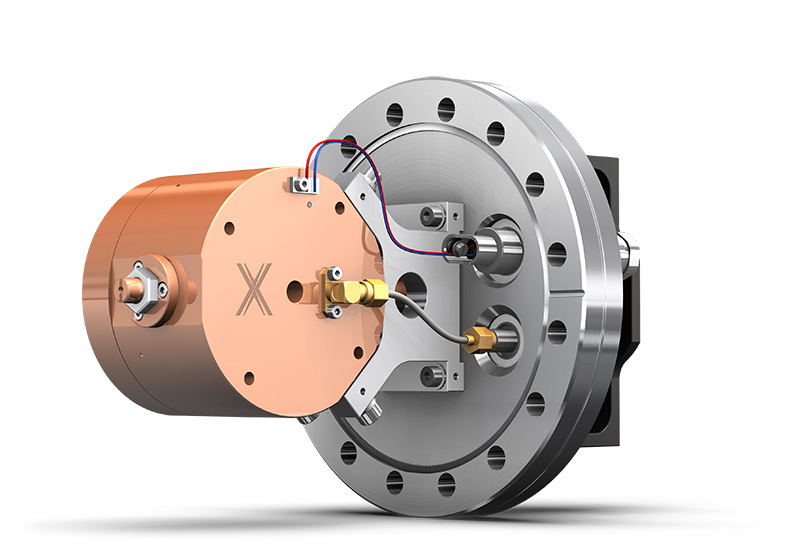
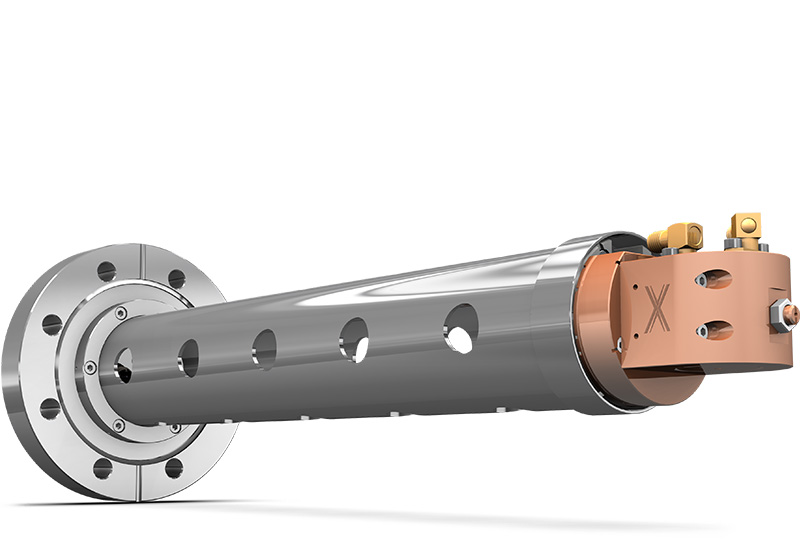
The Clocx Module (XFEG & CFEG compatible) adds ultrafast capability to your existing transmission electron microscope with no compromise in performance.

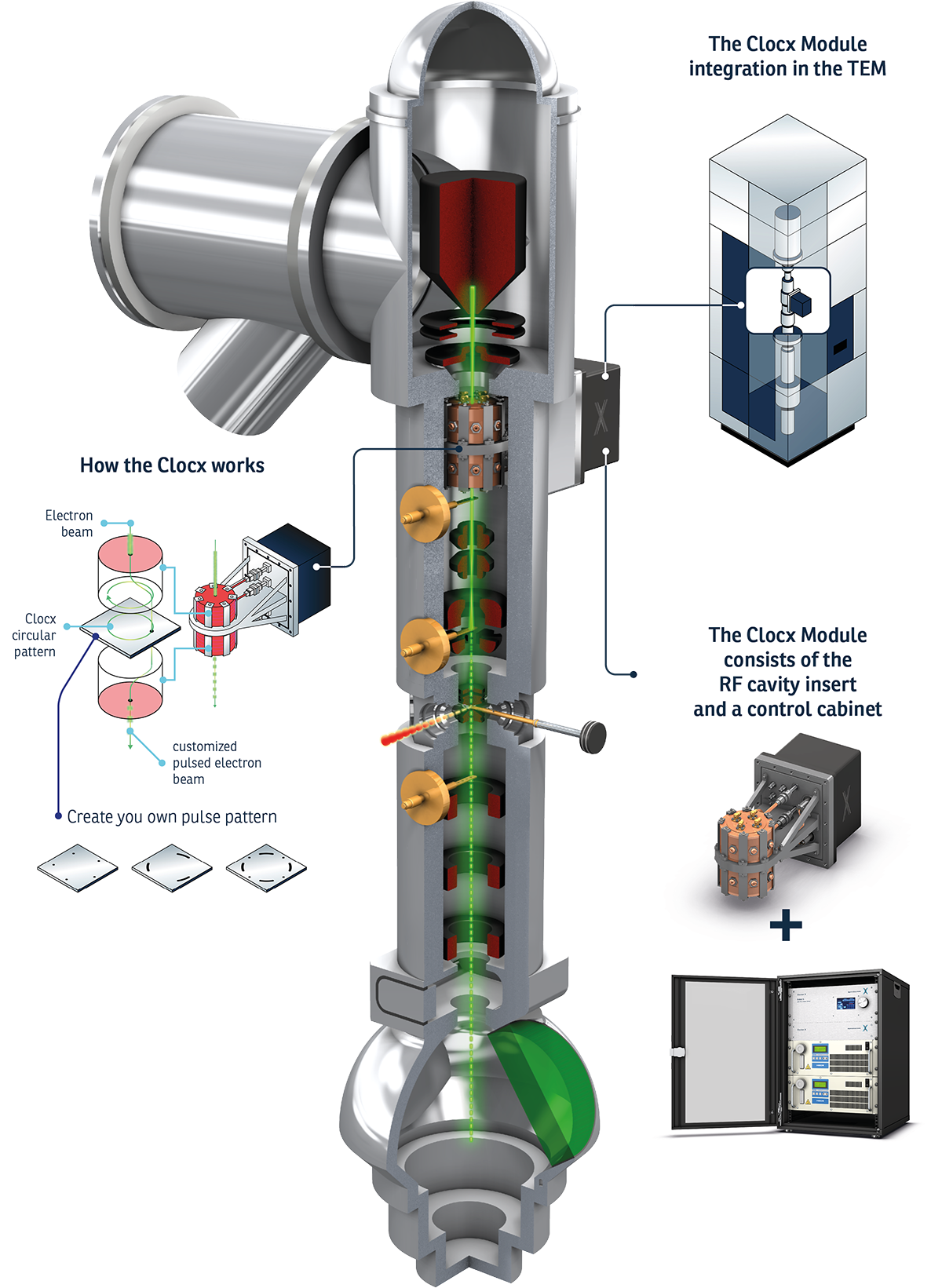
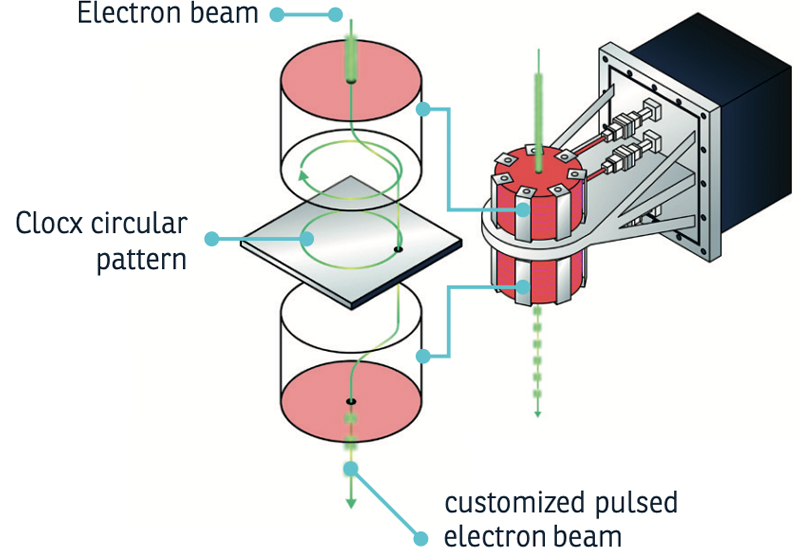
The module integrates directly into your current system, using a rotating magnetic field to convert the continuous beam into controllable pulses. Switching from normal to pulse mode takes minutes. Without the need to replace your TEM or invest in an amplified femtosecond laser for pulse generation, your setup gets full control over pulse structure with previously unobtainable flexibility.
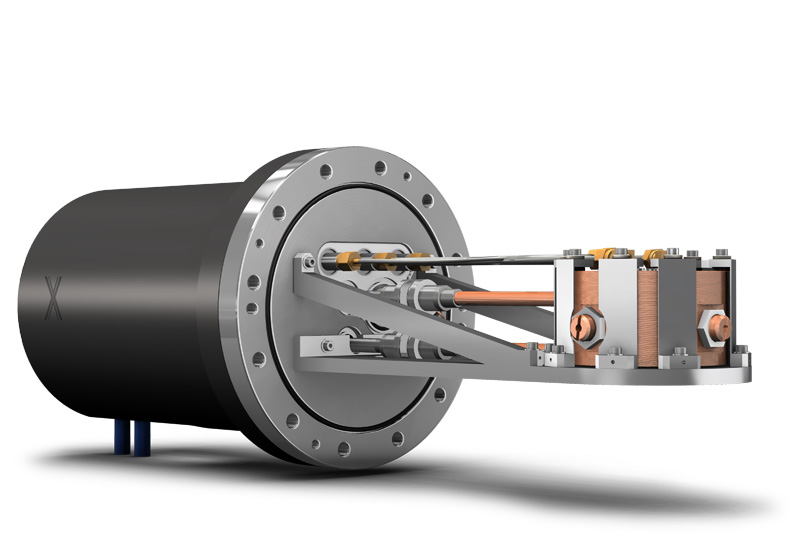
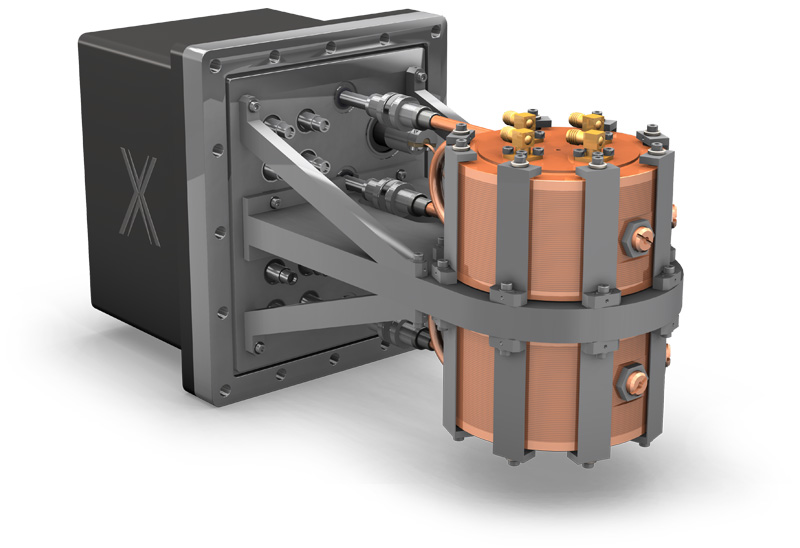
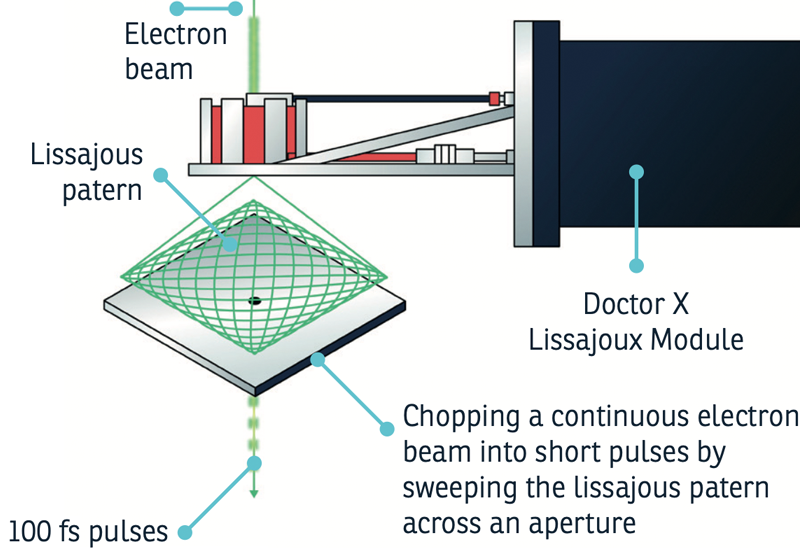
The Clocx Module consists of a modulator, an interchangeable chopping aperture, a demodulator, and a control cabinet. The module is placed between the electron gun and the condenser system of your TEM. The modulator uses a rotating magnetic field at GHz frequencies to displace the continuous beam onto a circular pattern. Time maps linearly onto the circle: each position on the circumference corresponds to a specific moment in the RF cycle, like a clock. A chopping aperture placed between modulator and demodulator selects which portions of the beam pass through. The demodulator, rotating with half period phase delay, returns the selected pulses to a straight line on the original optical axis.
The parallel displacement by the (de)modulator preserves beam angle, minimizing growth in emittance and energy spread. Peak brightness is conserved, leaving spatial resolution in pulsed mode unchanged from continuous operation. By swapping apertures with different hole patterns, you configure the pulse structure to your needs: single pulses at 2.45 GHz, higher harmonics up to THz rates, low-frequency modes from 1 to 80 MHz, or fully custom temporal profiles. A microwave synchronization output connects to your pump laser for pump-probe experiments. The module ships complete: modulator and demodulator inserts, aperture set, control cabinet with RF driver, chillers, and control software.
Specifications:
- Base frequency: 2.45 GHz
- Repetition rate: 1 MHz – THz (via aperture selection and harmonic operation)
- Pulse duration: 100 fs – 400 ps
- Pulse profiles: configurable via interchangeable apertures
- Spatial resolution: unchanged from continuous mode
- Gun compatibility: XFEG & CFEG
The Invisible Visible
Ultrafast processes - events that unfold on femtosecond timescales - remained invisible for decades. These processes occur too fast to be captured by conventional instruments, leaving entire classes of physical, chemical, and biological phenomena effectively out of reach. Our technology changes that.
Pump probe measurements
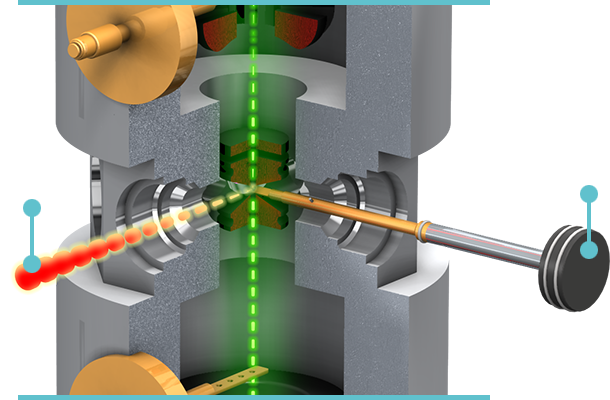
Doctor X instruments achieve superior time resolution in electron microscopy. Researchers can now observe phase transitions as they happen, watch phonons vibrate and capture photosynthesis dynamics at the molecular level. This is like moving from photography to video at the atomic scale.
In a pump probe scheme a pump laser pulse is used to excite the sample. The pulsed electron beam that probes the sample is synchronized to the laser pulse. Varying the delay between the pump and the probe allows the lissajoux to make the invisible visible.
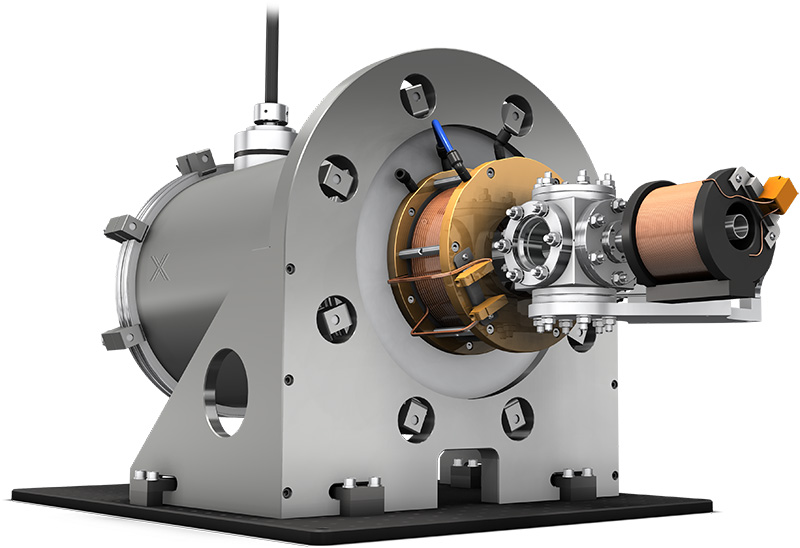
Doctor X makes research instruments that give scientists control over time, energy, and measurement at a precision that wasn’t accessible before.
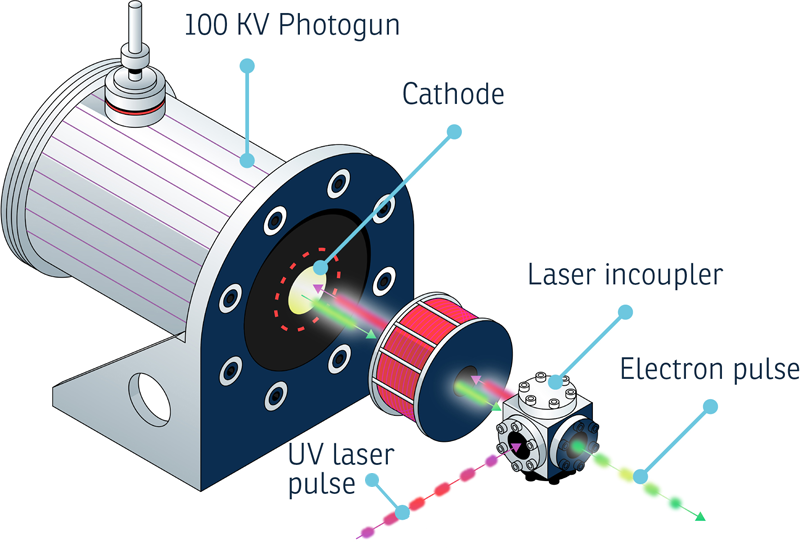
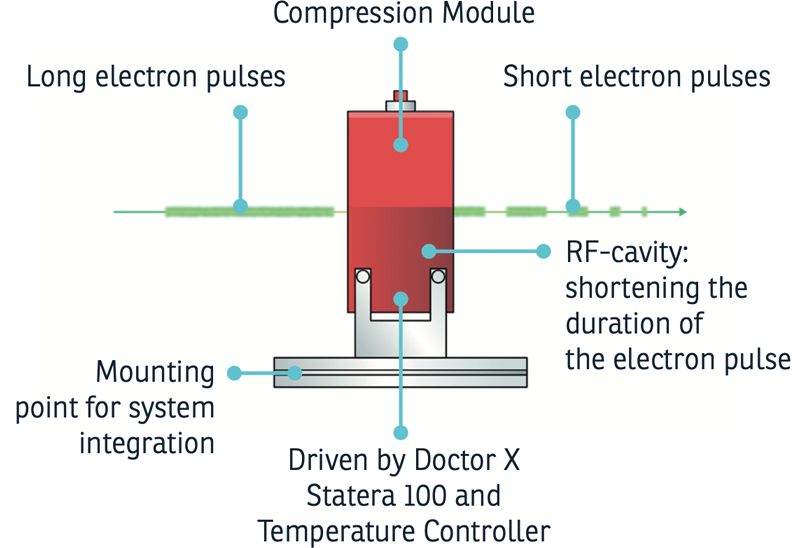
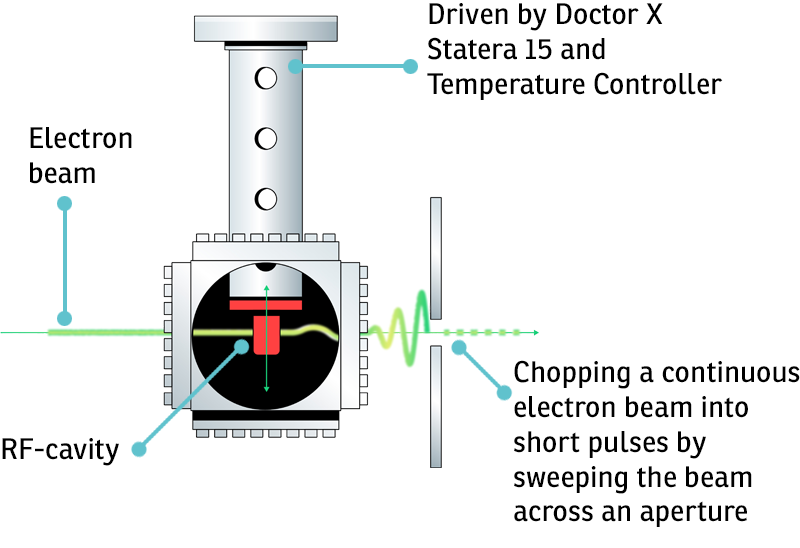
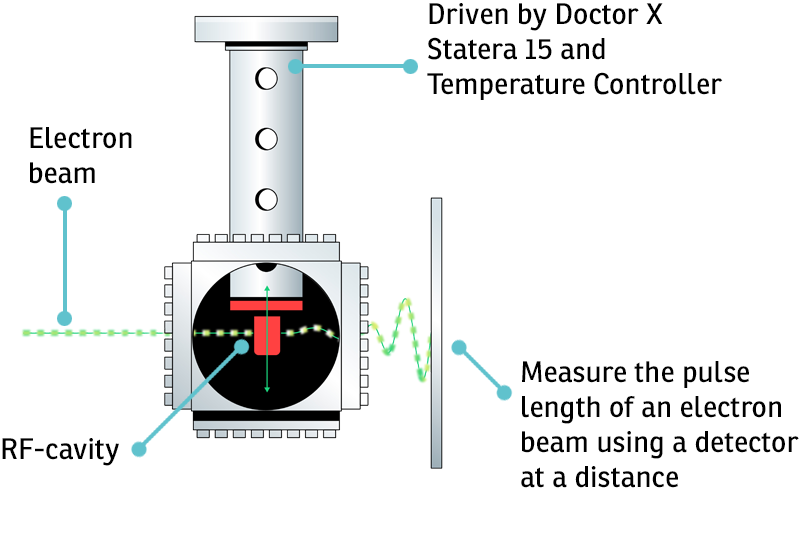

Doctor X works alongside research institutes, universities, and industry partners worldwide. These collaborations with engineers, scientists, and inventors matter, as they share a commitment to making instruments that unlock new research. These are our peers.
Together, we continue to move beyond science dreams.

X LAB is where Doctor X develops the next generation of ultrafast electron techniques. This is the heart of the company - where ideas become instruments.

Research here pushes beyond current products. Rotating mode cavities for faster pulse repetition. Pulse shaping for application-specific beam profiles. X-ray generation through the Smartlight project. Each direction opens new capabilities for researchers who need them.
The work happens the same way it always has at Doctor X: making, testing, refining, and sometimes discarding. Not every idea becomes a product. The ones that do will extend what ultrafast electron techniques can unlock - and what researchers can discover.